Friday, October 29, 2010
The Red Eye Report's 2010 October Horrorthon #29: "Saw 3D"
Thursday, October 28, 2010
The Red Eye Report's 2010 October Horrorthon #28: "The Pit and the Pendulum" (1961)
Wednesday, October 27, 2010
The Red Eye Report's 2010 October Horrorthon #27: "Zombie Self-Defense Force"
When the first five minutes of your movie include UFOs, radiation, and George Romero references, you know it can't end well. Sure enough, when aliens crash-land in suburban Japan, the ensuing fallout spawns hungry hordes of the walking dead. Any who die for whatever reason rise again as ghouls, and even the old "shoot 'em in the head" stand-by isn't enough to put these suckers down. As the zombie ranks swell, survivors spanning a group of soldiers on maneuvers and a spoiled pop idol come to gather at a secluded country inn. But the situation only grows more dire as the undead continue to congregate, with the gang's only hope of escape resting with an army grunt who has a secret not even she's aware of.
So there's these guys in a house against a zombie apocalypse -- oh, wait, you've heard this one already? Yeah, and it seems like the rest of the world has, too. No matter how versatile the undead have become over the ages, it's the oldest of hats that we see filmmakers don time and again. The best shot at being entertained is if someone plays the formula for goofs, so in this respect, Zombie Self-Defense Force is a step in the right direction. The film is fully aware of how many thrill-seeking hipsters and horror nuts will seek out anything with a whiff of controversy, so it plays its slim 76 minutes to a sensationalized hilt. Everything this movie can do to draw attention to itself, it does, and you know from the start that not a frame is to be taken seriously. But while there isn't a zombie genre cliche that's not addressed here, the trouble is that the flick does jack-all with what it's got.
Zombie Self-Defense Force subscribes to the Friedberg/Seltzer theory that just mentioning things constitutes good satire. Other than merely bringing up that one guy who's clearly hiding a zombie bite or how the most hateful character gets the goriest death scene, the film does nothing funny or observant with its material. It tries to coast on pure crazy, which helped make Monster X Strikes Back go by more quickly but leaves this one gasping for air. And just like Monster X, it chucks in a political angle that goes nowhere, matters little to what plot there is, and comes off as pretty damn vague to begin with. For what positions itself as a silly gorefest, Zombie Self-Defense Force isn't a whole lot of fun, and the uneven special effects don't help much. You'll get an impressive set piece once in a while (such as when the zombies pull a Rhodes on an unfortunate soldier), but most of the blood splatters and gore geysers look like they were drawn with "Mario Paint."
I hate to beat up on Zombie Self-Defense Force for doing what made the likes of Versus so damn awesome, but it goes to show you how vital execution is, especially with horror. It's not enough that you have zombies shuffling about; if you have passion, creativity, and, God forbid, a budget, chances are that you'll have a cult favorite on your hands. But when Zombie Self-Defense Force takes the easy way out, true bloodhounds can smell the dull disinterest from a mile away.
Monday, October 25, 2010
The Red Eye Report's 2010 October Horrorthon #25: "X the Unknown"
Sunday, October 24, 2010
The Red Eye Report's 2010 October Horrorthon #24: "Werewolf: The Devil's Hound"
Saturday, October 23, 2010
The Red Eye Report's 2010 October Horrorthon #23: "Voodoo Man"
.jpg)
Friday, October 22, 2010
The Red Eye Report's 2010 October Horrorthon #22: "The Unseen" (1945)
As would Jamie Lee Curtis and Carol Kane after her, Gail Russell assumes the role of a babysitter who's really in for it in 1945's The Unseen. Russell plays Elizabeth Howard, a young woman hired by the stern David Fielding (Joel McCrea) as governess for his children (Nona Griffith and Richard Lyon). But she's hardly had time to unpack her things before realizing she's stepped into the nuttiest house since the Femm estate. All manner of strange characters drift about the Fielding residence, including a shifty real estate agent, a handyman who keeps odd working hours, and a former nanny who's not about to move on. From all of this hubub emerges a peculiar mystery, involving a recent string of murders and a figure rooting around the house next door. When she learns the Fielding kids know more than they're admitting, Elizabeth attempts to gain their trust and crack the crimes before her name ends up in the obituaries next.
It was but a few days ago that I ragged on Return of the Living Dead 3 for having bugger-all to do with its namesake series. But now we have The Unseen, a film I like a fair deal more than has even less to do with its own supposed roots. You can see from the poster that The Unseen was billed as a follow-up to 1944's The Uninvited and is accepted as a sequel in certain circles. But not only do none of the latter film's characters show up here, the former completely ditches the supernatural angle in favor of more earthly chills. The only common threads are director Lewis Allen and star Gail Russell, no longer playing an outright victim but a more proactive part this time around. Strangely, though, I didn't mind so flimsy a connection, since the first film's spirit is present here, even if the spirits themselves are not. The set-up is straight out of The Turn of the Screw, wherein the relationship between governess and children provides the film's emotional core, as well as its main source of conflict.
But here's where The Unseen gets a bit murky, kids. The resentment kids have towards any foreign authority figure is natural, and the junior actors here convey this very well. But Griffith and (mostly) Lyon do almost too good a job of exuding brattiness, so much so that the story's flow suffers as a result. With much of the mystery hinging on what the Fielding kids know but won't tell, it gets irritating to see the resolution prolonged because one of them is being a stubborn little demon spawn. As such, The Unseen is often left trying to find stuff to do, and though it only lasts 81 minutes, it's still dishing out red herrings an hour in. It doesn't develop an intricate puzzle so much as it just makes everyone but Russell look guilty as all get-out, resolved whenever's convenient for the culprit. This doesn't give Russell much of a chance to really play detective, but she still delivers a sweet and sympathetic performance, particularly when she puts up with McCrea's crusty ways to an almost saintly degree.
Though I've exhibited more jeers than cheers, The Unseen isn't at all terrible. Again, Allen nails the atmosphere, which is dark, foggy, and teeming with spookiness. Although the supernatural isn't part of the plan, you still find yourself getting nervous over what real-life terrors await Elizabeth in the surrounding mist. Even more hard to find than The Uninvited nowadays, The Unseen isn't worth breaking a sweat over, but should the Turner Classic Movie gods feel generous enough to schedule it, it's worth catching just to say you've seen it.
Thursday, October 21, 2010
The Red Eye Report's 2010 October Horrorthon #21: "Teeth"
Wednesday, October 20, 2010
The Red Eye Report's 2010 October Horrorthon #20: "Subspecies"
Tuesday, October 19, 2010
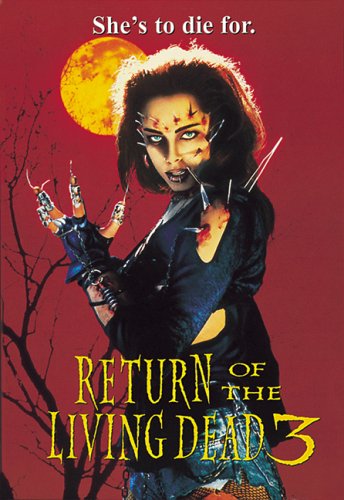
The Red Eye Report's 2010 October Horrorthon #19: "Return of the Living Dead 3"
Long before Umbrella entered the picture, Uncle Sam had the market cornered on misguided experiments involving the undead. The zombie outbreaks in the first two Return of the Living Deads apparently weren't enough to phase army brass, since number three here begins as they use the dreaded Trioxin to make the ghouls into indestructible soldiers. But even after seeing himself how the stuff tends to inspire cravings for flesh, despondent teen Curt (J. Trevor Edmond) uses the Trioxin to resurrect his gal pal Julie (Mindy Clarke) after she dies in an accident. Come back she does, and with her comes not only a touch of rigor mortis but a love of body modification that keeps her newfound hunger at bay. But a few stray nibbles threatens to unleash a zombie horde in South Central, forcing Curt to choose between staying by Julie's side or saving the world from a Romeroesque fate.
1985's The Return of the Living Dead was a goofy mirror image of the traditional zombie flick. Written with as much dark hilarity in mind as bone-chilling creepiness, it was a truly refreshing movie, and as maligned as the second one continues to be, it was faithful to this semi-serious vein. So what does Return of the Living Dead 3 have in store? How about absolutely nothing its name had come to be known for? Now before you cry fanboy, let me say that I have no problem with movies that deviate from an established formula, given they pull it off. But then there's trying something so different, you might as well strike out on your own instead of clinging desperately to name recognition as a means of finding success. That's not to say Return of the Living Dead 3 couldn't have worked (zombified version of a Roger Corman biker romance? -- sign me up!), but the tone it adopts would be too melodramatic for the Hallmark Channel, let alone for something from the director of Society.
Satire, gallows humor, irreverency -- none of that's in Return of the Living Dead 3. The most it has to do with its forefathers is Mindy Clarke's Julie pulling a Cenobite two-thirds of the way through and turning into the Linnea Quigley-in-training you see on the cover art. Instead, the film opts for a love story it treats far too seriously, so downbeat and dreary in tone that it clashes big-time with the insane effects work. If anything, these are the remnants of the Return of the Living Dead 3 we could've had, one packed to the gills with unrelentingly disgusting zombies made on a budget of what covers Brad Pitt's cheese fries these days. More than any other story in the franchise, this is the one that could've done with living it up and embracing its campy side. But amusing Latino gangster stereotypes aside, the flick is just no fun, and as sweet of a girl Mindy Clarke most likely is, don't be surprised if her hammy performance starts giving you Creedence Leonore Gielgud flashbacks.
I know there's an audience for Return of the Living Dead 3, and hell, anything that gives the ladies a chance at being however brief a horror icon is worth a little something. But whatever good times I hoped for were washed away a depressing plot, a dull sense of pacing, and a cast whose acting skills each achieved their own shade of bland. I've seen worse (like Return of the Living Dead 4 and 5), but this one would've done well by honoring its ancestors over taking the emo way out.
Monday, October 18, 2010
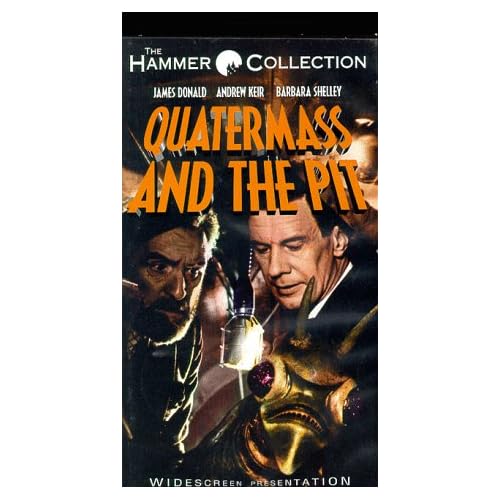
The Red Eye Report's 2010 October Horrorthon #18: "Quatermass and the Pit"
Beneath the bustling streets of London lies the greatest terror to face England since S Club 7. While working on extending a subway tunnel at fictional Hobbs End Station, a construction crew uncovers the well-preserved remains of ape men dating back five million years. But as the scientific community jumps for collective joy at this discovery, an even more fantastic find is just a few shovelfuls of mud away. Workers proceed to dig out a strange vessel, which very much intrigues Bernard Quatermass (Andrew Keir), a professor asked to help oversee the excavation. But the more evidence he turns up, the more Quatermass believes that not only is the craft not of this earth but is also the source of an ancient evil. Of course, the military shoots down his theories in order to avoid a panic, but pandemonium is just what runs amok when whatever's in that ship decides to unleash its powers on an unsuspecting populace.
Quatermass and the Pit is among England's most well-known science fiction tales -- though it beats the hell outta me as to why. Perhaps it's a response to how gung-ho America is with its own sci-fi, featuring characters who are scientists in the sense that there are beakers around when they blast little green men to kingdom come. Thus, patience is a virtue in Quatermass and the Pit, as the story hinges on the professor learning exactly what's buried down below before the worst occurs. It's a film in which fools pay the price for rushing in, but while that sounds great on paper, the flick doesn't leave itself much to go on. Hypotheses and experimentation do not a rip-roaring thriller make here, and the story's admittedly cool concepts end up muddled as a result. It's hard to discuss without stopping in spoiler country, but Quatermass and the Pit pulls the "we are the monsters" card with little basis for it, which has much to do with the film's inconsistent stock in the fantastic.
I don't think it's a big shock to learn that we're dealing with aliens here, but just try to dissuade Quatermass and company from presuming otherwise. As the professor delves into the bizarre history of Hobbs End, the possibilities of ghosts, demons, and poltergeists are brought up, but just about anyone who mentions aliens may as well be laughed out of Europe. It's another case of Indiana Jones 4 Syndrome, in which you've figured things out two acts before the story has, and the movie's only response is to plug its ears and go, "Lalalalala!" Plus, while it might just be my lack of familiarity, Quatermass just doesn't seem to be that interesting of a character. This is only the second time I've seen a Quatermass adventure (and I caught the last one three years ago), but there's still nothing about the professor to suggest why he's so hailed of a genre hero. He's your typical scientist trying to convince the world that he's not off his rocker, and though Keir's performance isn't bad by any means, he doesn't do much to deviate from the archetype.
Quatermass and the Pit was a Hammer production, not to mention one that wasn't a Gothicized monster mash. The Hammer touch does come through in the eerie atmosphere, and as chuckle-inducing as the big revelations are, director Roy Ward Baker does a good job of getting you at least a little freaked out by the unknown. But overall, Quatermass and the Pit is a really stiff watch, its ideas too ill-conveyed to fully intrigue and its structure too formal to enjoy as a straight-up fright flick.
Sunday, October 17, 2010
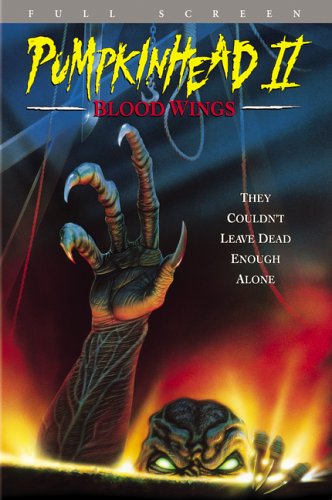
The Red Eye Report's 2010 October Horrorthon #17: "Pumpkinhead II: Blood Wings"
Ah, yes, the 1950s. It was an innocent era, one of soda fountains, Buddy Holly, and premeditated murder. At least that's how it was in the cozy hamlet of Ferren Woods, were some teenage toughs slashed up a deformed mountain boy and made his death look like an accident. Some years later, whispers of the kid still echo throughout Ferren Woods, and they only get louder when a group of 30-year-old highschoolers swing by his gravesite. Through an elaborate and easily-avoidable ritual, the teens end up calling upon the demon Pumpkinhead, who proceeds to go on a bloody, vengeful tear through town on the dead boy's behalf. But after justice has been served, Pumpkinhead gets a hankering for fresh meat, leaving the kids little time to save their skins and send the giant clawed one back to the hell from whence it came.
Pumpkinhead II: Blood Wings was one of the first scary movies I remember noticing when my parents buckled down and got HBO. Chances are that if it was late at night, this was on, and the likes of Leprechaun 2 or Ticks were soon to follow. But I never sat down for the whole thing (Killer Klowns from Outer Space was more my speed), and when I finally caught the 1988 original a few years back, it took me till now to summon the interest to explore its sequels. After watching Blood Wings, I could have waited a few more centuries, but to be fair, not a lot of folks dig this one to begin with. Pumpkinheads 3 and 4 have gotten a crummy rap as well, though it's Blood Wings that gets particularly dumped on for departing so much from its cult predecessor. Still, I wasn't a huge fan of the first flick, so I don't really hate its inaugural follow-up out of a sense of allegiance -- not when there are so many other things to hate it for.
No doubt, Pumpkinhead II is a dud, but it's a dud for the usual reasons: paper-thin acting, ho-hum effects work, and a script that chews up and spits out anything mildly creative (which you tend to get with Jeff "Sequel Killer" Burr in the director's chair). But reports of the film's unendurable crappiness have been greatly exaggerated, and I'd be lying if I said it didn't amuse me, at least a little bit. While the acting is indeed terrible, just looking over the casting choices is entertaining on its own. Andrew Robinson (Hellraiser) and Linnea Quigley are no big shock, but then come Soleil Moon Frye, Kane Hodder, and Roger Clinton (of "I'm freaking related to Bill Clinton" fame) to have you eager to see what C-list celebs will pop their heads in next. Also, as horribly executed as Pumpkinhead's kills are (mostly due to an accompanying strobe light that makes them borderline unwatchable), they're fun in their inherent silliness, especially when he takes on a trio of redneck chicken farmers.
Most people can and will go their whole lives without seeing Pumpkinhead II: Blood Wings. In fact, horror fans probably can too, save for us masochists, completists, and the compulsive at heart that just have to watch anything and everything. It'll be a while before Pumpkinhead: Ashes to Ashes ends up in my player, but should anyone be foolish enough to question why, one finger pointed in the direction of Blood Wings oughta be enough to say it all.
Saturday, October 16, 2010
The Red Eye Report's 2010 October Horrorthon #16: "Onibaba"
Friday, October 15, 2010
The Red Eye Report's 2010 October Horrorthon #15: "Noriko's Dinner Table"
Wednesday, October 13, 2010
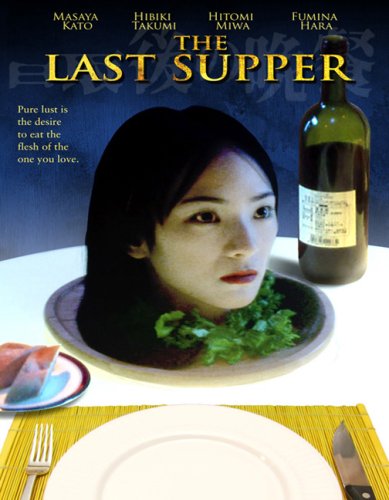
The Red Eye Report's 2010 October Horrorthon #13: "The Last Supper" (2005)
Monday, October 11, 2010
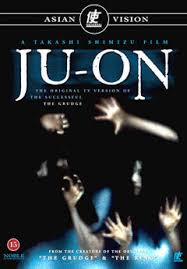
The Red Eye Report's 2010 October Horrorthon #11: "Ju-On: The Curse"
Before Sony saw fit to give him a budget, Takashi Shimizu cut his teeth in the world of shot-on-video with Ju-On: The Curse. A prototype of his J-horror hit-to-be, this Ju-On also centers on a house that's been damned to the nth degree. A tragic event took place there some time ago, leaving behind a festering evil that claims the lives of those who dwell within its walls. As with the others in the series, the seemingly harmless abode's story is chronicled through nonlinear vignettes, ranging from three to ten minutes in length and focusing on one particular soul that comes in contact with the house. From a concerned teacher to a worried girlfriend, many fall prey to the wrath a croaking spirit that comes to scare them into an early grave. But when the curse finds its way to a frightened real estate agent, she resolves to warn potential buyers of the two stories of terror that await them.
I like to think that Takashi Shimizu is a smart guy. His work impressed and scared the hell out of Sam Raimi, who brought him to the attention of stateside horror fans and kept the Asia shock boom truckin' in The Ring's wake. Shimizu knows what's expected of him and delivers nothing less, which is why the idealist inside me wants to believe that he made six Ju-On features (counting The Grudge and its first sequel) to prove how much the premise just doesn't work. There's no other way to explain why anyone rational would regurgitate entire characters and story threads so many times, when it's been made clear that everyone in these flicks is boned from the word go (turns out there's not much suspense in nihilist horror stories). Maybe Ju-On is meant to be enjoyed in fragments; take a random frame from any ghost sequence, find the right sound effect, and boom, you have Internet screamer gold. But trying to follow an actual story or sympathize with anyone not currently undead here is as worthwhile as watching a Ringu print that's being fed through a woodchipper.
Speaking of choppy structures, let's talk about the one Ju-On: The Curse has to share with the class. To Shimizu's credit, it works better here than in some of his other movies, but it still reeks of cheating to have the turn of events jumbled around for the sake of Shimizu feeling good about bamboozling you in the easiest way possible. Plus, for a film built on the element of surprise and ghosts that appear out of nowhere, nothing really shocks you here. Even forgetting that its fellow Ju-Ons exist, you know exactly what will come to pass here (that its climactic plot twist is telegraphed by the freaking opening title card is kind of a downer, as well). Hell, I thought being video-based would help Shimizu here, since it added a lot to the film's flawed but intermittently spooky comrade Ju-Rei: The Uncanny, but no dice. The effects are crummy, the dramatic zooms are hilarious, and let's say it's not all that horrible that actors this stiff don't last long onscreen.
I want to say I read somewhere that much of Japanese cinema is based on a foundation of emotion over storytelling perfection. The ultimate goal gets more attention than the journey there, which I can totally see going on with Ju-On: The Curse. When all's said and done, it'll freak out its share of folks, but if 70 minutes of near-silence and household busywork are the best it can serve up along the way, you're better off having a grand old time doing your own damned chores.
Sunday, October 10, 2010
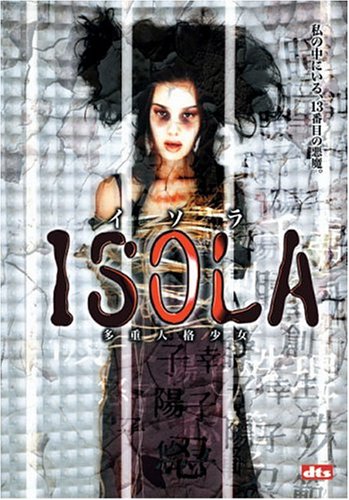
The Red Eye Report's 2010 October Horrorthon #10: "Isola"
Saturday, October 9, 2010
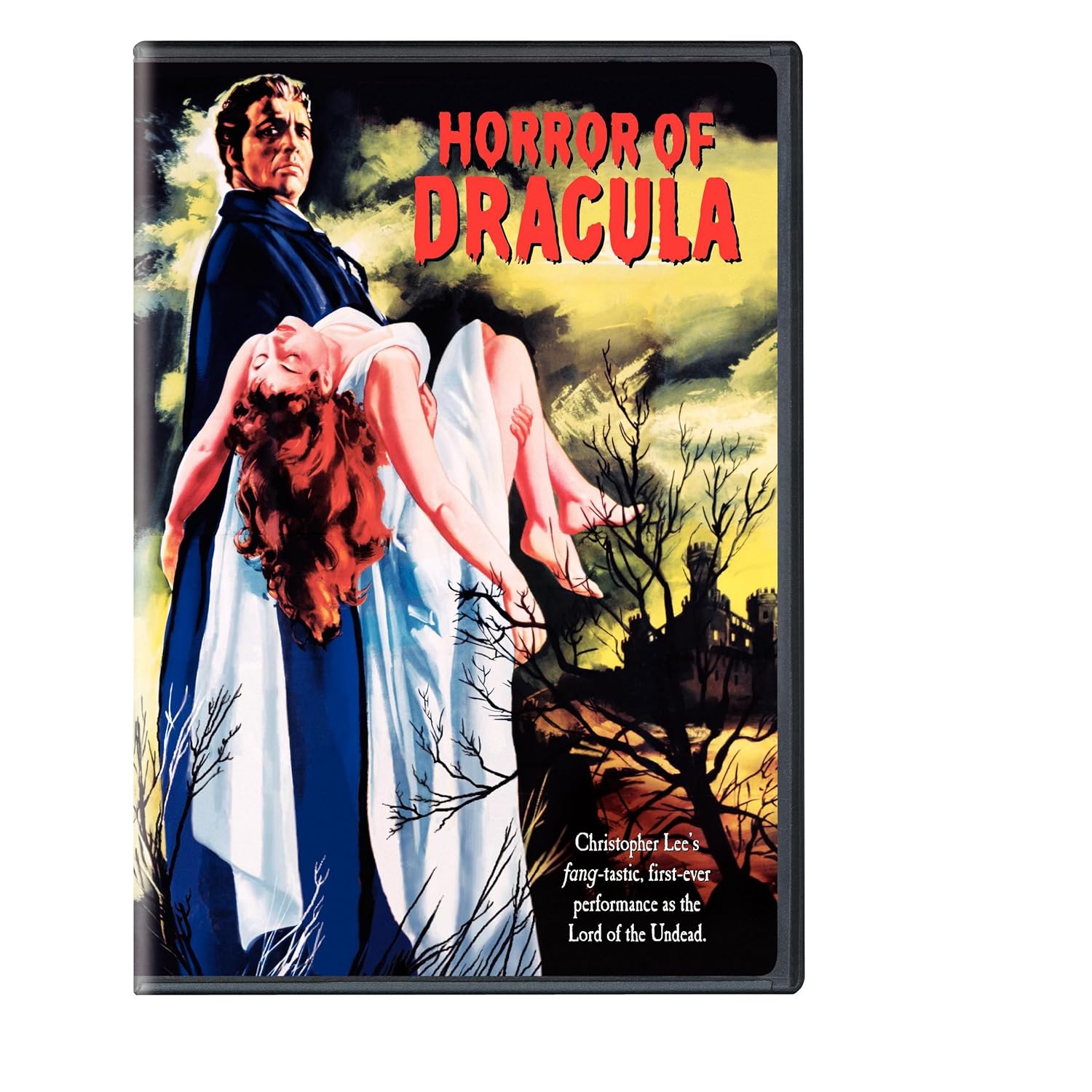
The Red Eye Report's 2010 October Horrorthon #9: "Horror of Dracula"
Bela Lugosi and Frank Langella had similar debuts as the king of all vampires, but leave it to Christopher Lee to change things up a bit. Horror of Dracula starts off as Jonathan Harker (John Van Eyssen) arrives at the Count's humble abode not to sell him Carfax Abbey but to send his bloodsucking ass to the great beyond. When Harker's hunt hits a snag, good ol' Van Helsing (Peter Cushing) picks up the trail, only to find that his partner has met an unfortunate end. What's worse is that Dracula, driven by revenge, has targeted Harker's fiance Lucy (Carol Marsh) for assimilation into his undead fold. Van Helsing is prepared to combat Dracula with all his might, but in a society that's shunned old myths like that of the vampire, stopping the Count's evil influence from spreading is easier said than accomplished.
Though I pride myself on being a classic horror nerd, the Hammer pictures are ones that I've spent embarrassingly scant time exploring. I guess I've been on bended knee at Universal's altar too long to catch much beyond 1959's atmospheric but dull take on The Mummy and the blood-soaked gender politics of Dr. Jekyll and Sister Hyde. But I can get why Horror of Dracula came to be; the titans of horror needed to retrieve their lost luster, and if Universal wasn't going to answer the call, then dammit, Hammer would. For its time, Horror of Dracula probably was a little intense, even with but a fraction of the violence and titillation the Hammer flicks would become famous for. But nowadays, the film is harmless and borderline quaint at times, which would be fine, had it not embraced the brisk pacing of a molasses avalanche. It clocks in at a little over 80 minutes but feels eternal, especially when Van Helsing and crew painstakingly track down Dracula in scenes better left to line the Count's parakeet cages.
This brings me to what is arguably Horror of Dracula's greatest flaw: Dracula himself. The man is one of the most-performed characters in the history of the arts, a figure recognized by millions, and, as far as the horror genre is concerned, a freaking rock star. So outside of having Omar Epps in the cast, how can you possibly ruin a Dracula movie? Well, as Horror of Dracula demonstrates, barely including the guy is a good start. You could say Lee chose to make Dracula more animal than man, only emerging to strike fast and vanish just as quickly, and you'd be right. The Count is a straight-up monster here, making no effort to feign nobility, but feeling truly threatened is difficult when he's mainly seen dashing off to his coffin. This leaves us to follow Van Helsing, and bless Cushing's droll heart, but without being featured less so than Dracula or at least depicted on equal terms, Van Helsing's pious monologues fall on deaf ears and weary eyes. If anything, this flick goes to show you why Dracula is nobody's opening act.
Horror of Dracula has its place in fright film history, and I'm inclined to forgive it certain flaws. The set design is really fantastic, and compared to other versions of the Bram Stoker tale, be they Coppola or Browning, this one has an identity all its own. Lee's Dracula left an impression on monster fans, and I look forward to catching his other outings behind the cape, but it's unfortunate that the one to start it all holds up about as well as the Count would in sunny San Diego.
Friday, October 8, 2010
The Red Eye Report's 2010 October Horrorthon #8: "Goth"
Thursday, October 7, 2010
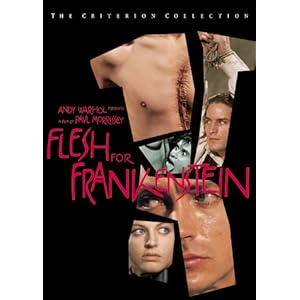
The Red Eye Report's 2010 October Horrorthon #7: "Flesh for Frankenstein"
Baron Frankenstein (Udo Kier) views the world as a five-year-old would an ant farm. Within the bowels of a secluded mansion, he obsesses over purifying the human race and creating life as he sees fit -- by way, naturally, of stitching together only the finest body parts. As our story begins, the Baron has chosen a farmhand (Srdjan Zelenovic) to provide the head topping the culmination of his life's work. Unfortunately, he's missing the sex drive required to propogate the Baron's master race with a female creation he also has stashed away. That belongs to a local stableboy (Joe Dallesandro), who's currently using his gift to service the frigid Baroness Frankenstein (Monique van Vooren). But after the servant discovers what happened to his friend, he sets out to railroad the Baron's experiments and end his madness for good.
You have to wonder what frame of mind was used in making Flesh for Frankenstein. Considering Andy Warhol's involvement (which was reportedly very thin), being confused could just as well be the point, but this intensely sexualised take on a classic horror story has an agenda that rings quite clearly. The film is on a mission to challenge you, and challenge it does, reminding viewers of the true terrors of a tale that had at the time been rendered innocuous by kiddie monster shows. In fact, Flesh for Frankenstein could have the strongest moral code of any Frankenstein adaptation. While so many other versions inevitably cast their doctors as erstwhile noble men falling under the spell of scientific progress, Kier's Baron is a bastard to the bitter end. Blunt and open about his desire for racial purity, the Baron not only gave into insanity long ago but couldn't care less who knows it.
Yet as Wikipedia is so kind to include in its summary, Flesh for Frankenstein pays as much stylish tribute to the mad scientist classics as it satirizes and sensationalizes them to the extreme. The decaying laboratory, the various apparatuses, monologuing about life and death every three minutes -- there's enough common ground for monster fans to get comfy before being plunged into a psychosexual clustercuss. But the flick's on-the-fly approach does have its drawbacks, namely in the acting (or lack of acting) department. Although we know and love Udo Kier as the cult icon he is today, you can tell this is one of his first big gigs, so don't be surprised to catch a whiff of Tommy Wiseau in his performance. But he's still bugnuts crazy enough to let pass, as opposed to Dallesandro's wooden American accent leaving his scenes with the profundity of a cabbage belch.
Notorious for a reason and not for the faint of heart (or those who value joy in the world), Flesh for Frankenstein is rough around the edges but undeniably fascinating. Even if Warhol didn't have much to do with the production, his presence is there, persisting in writer/director Paul Morrissey's quest to show audiences what true horror is. Driven equally by ideas and exploitation, Flesh for Frankenstein is one tawdry little creation with plenty of life in it.