Wednesday, October 20, 2010

The Red Eye Report's 2010 October Horrorthon #20: "Subspecies"


In far-off Transylvania, a truce that's protected man from the vampire scourge is about to be shattered. Exiled bloodsucker Radu (Anders Hove) has returned home to do in his father (Angus Scrimm) and lay claim to the Bloodstone, an artifact housing the blood of all saints. The only thing standing in Radu's way of becoming lord of all undead is his half-brother Stefan (Michael Watson), who doesn't look fondly upon his demonic heritage. But just as their blood feud heats up, into frame wander a trio of friends/students who've come to bone up on their Transylvanian folklore. When one of the girls (Laura Tate) starts crushing on Stefan, however, Radu sees it as all the leverage he needs to turn the fight in his sinister favor.


The Full Moon gang is nothing, if not persistent. The B-movie pioneers churned out what their fans craved on a regular basis, whether or not they had the funds and film stock to do so. It was in Full Moon's heyday that Subspecies came about and made surprisingly decent use of the studio's cost-cutting measures. Charles Band movies having been 80% of Romania's economy in the '90s, it's no biggie that Subspecies was shot there too, but what is surprising is how effectively its locations were used; they wanted a crusty, eastern European setting, and dammit, they got one. The mood fits the scope of the story, which is simple and direct without feeling too lazy. You can tell Full Moon was proud of this one, especially when the credits boast a full orchestra, as opposed to Richard Band slamming his head on a Casio for 90 minutes. Even Radu's devilish minions (the "subspecies" of the title) look kinda cool, a product of Full Moon's fascination with all things small and homicidal.


But this is a Band collaboration we're dealing with, so here's the part where I dish on how straight-up mediocre Subspecies is. There was some effort put into this (being the first chapter of a franchise, there wasn't any stock footage to recycle just yet), but the filmmakers burned through what they did have pretty quickly. Hell, Scrimm (wearing one doozy of a Doc Brown fright wig) is dead in two minutes, so the remaining 80 are spent trailing the Baby-Sitters Club until Radu actually attacks somebody. To his credit, Hove's make-up work makes Radu look fairly imposing, but I couldn't tell you what he hopes to achieve from having the Bloodstone other than having the Bloodstone. The rest of the story moves as expected, from an anemic romance subplot to the standard sequel-establishing finale, turning up no surprises and performing no feats of ambition along the way. As horrible as it was, even The Gingerdead Man gets points for pure crazy.


As low-budget vampire outings go, Subspecies is no better or worse than the norm. It's notable for little more than being one of the few times Charles Band was responsible for something that didn't breathe Andre Toulon's name for once. Underwhelming for horror at large and par for Full Moon's course, Subspecies aims to be nondescript and succeeds with flying colors.

Tuesday, October 19, 2010

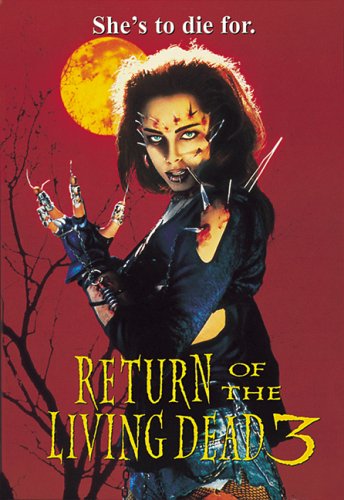
The Red Eye Report's 2010 October Horrorthon #19: "Return of the Living Dead 3"


Long before Umbrella entered the picture, Uncle Sam had the market cornered on misguided experiments involving the undead. The zombie outbreaks in the first two Return of the Living Deads apparently weren't enough to phase army brass, since number three here begins as they use the dreaded Trioxin to make the ghouls into indestructible soldiers. But even after seeing himself how the stuff tends to inspire cravings for flesh, despondent teen Curt (J. Trevor Edmond) uses the Trioxin to resurrect his gal pal Julie (Mindy Clarke) after she dies in an accident. Come back she does, and with her comes not only a touch of rigor mortis but a love of body modification that keeps her newfound hunger at bay. But a few stray nibbles threatens to unleash a zombie horde in South Central, forcing Curt to choose between staying by Julie's side or saving the world from a Romeroesque fate.

1985's The Return of the Living Dead was a goofy mirror image of the traditional zombie flick. Written with as much dark hilarity in mind as bone-chilling creepiness, it was a truly refreshing movie, and as maligned as the second one continues to be, it was faithful to this semi-serious vein. So what does Return of the Living Dead 3 have in store? How about absolutely nothing its name had come to be known for? Now before you cry fanboy, let me say that I have no problem with movies that deviate from an established formula, given they pull it off. But then there's trying something so different, you might as well strike out on your own instead of clinging desperately to name recognition as a means of finding success. That's not to say Return of the Living Dead 3 couldn't have worked (zombified version of a Roger Corman biker romance? -- sign me up!), but the tone it adopts would be too melodramatic for the Hallmark Channel, let alone for something from the director of Society.

Satire, gallows humor, irreverency -- none of that's in Return of the Living Dead 3. The most it has to do with its forefathers is Mindy Clarke's Julie pulling a Cenobite two-thirds of the way through and turning into the Linnea Quigley-in-training you see on the cover art. Instead, the film opts for a love story it treats far too seriously, so downbeat and dreary in tone that it clashes big-time with the insane effects work. If anything, these are the remnants of the Return of the Living Dead 3 we could've had, one packed to the gills with unrelentingly disgusting zombies made on a budget of what covers Brad Pitt's cheese fries these days. More than any other story in the franchise, this is the one that could've done with living it up and embracing its campy side. But amusing Latino gangster stereotypes aside, the flick is just no fun, and as sweet of a girl Mindy Clarke most likely is, don't be surprised if her hammy performance starts giving you Creedence Leonore Gielgud flashbacks.

I know there's an audience for Return of the Living Dead 3, and hell, anything that gives the ladies a chance at being however brief a horror icon is worth a little something. But whatever good times I hoped for were washed away a depressing plot, a dull sense of pacing, and a cast whose acting skills each achieved their own shade of bland. I've seen worse (like Return of the Living Dead 4 and 5), but this one would've done well by honoring its ancestors over taking the emo way out.

Monday, October 18, 2010

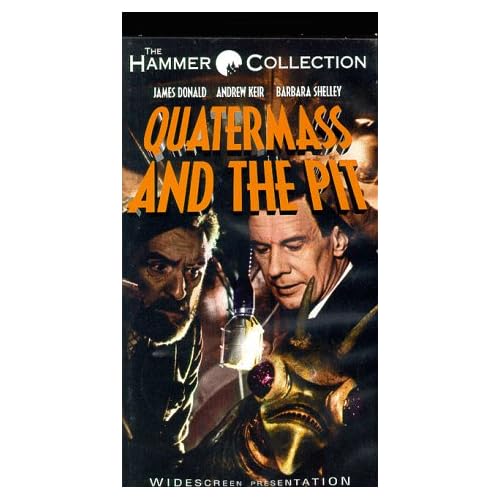
The Red Eye Report's 2010 October Horrorthon #18: "Quatermass and the Pit"


Beneath the bustling streets of London lies the greatest terror to face England since S Club 7. While working on extending a subway tunnel at fictional Hobbs End Station, a construction crew uncovers the well-preserved remains of ape men dating back five million years. But as the scientific community jumps for collective joy at this discovery, an even more fantastic find is just a few shovelfuls of mud away. Workers proceed to dig out a strange vessel, which very much intrigues Bernard Quatermass (Andrew Keir), a professor asked to help oversee the excavation. But the more evidence he turns up, the more Quatermass believes that not only is the craft not of this earth but is also the source of an ancient evil. Of course, the military shoots down his theories in order to avoid a panic, but pandemonium is just what runs amok when whatever's in that ship decides to unleash its powers on an unsuspecting populace.

Quatermass and the Pit is among England's most well-known science fiction tales -- though it beats the hell outta me as to why. Perhaps it's a response to how gung-ho America is with its own sci-fi, featuring characters who are scientists in the sense that there are beakers around when they blast little green men to kingdom come. Thus, patience is a virtue in Quatermass and the Pit, as the story hinges on the professor learning exactly what's buried down below before the worst occurs. It's a film in which fools pay the price for rushing in, but while that sounds great on paper, the flick doesn't leave itself much to go on. Hypotheses and experimentation do not a rip-roaring thriller make here, and the story's admittedly cool concepts end up muddled as a result. It's hard to discuss without stopping in spoiler country, but Quatermass and the Pit pulls the "we are the monsters" card with little basis for it, which has much to do with the film's inconsistent stock in the fantastic.

I don't think it's a big shock to learn that we're dealing with aliens here, but just try to dissuade Quatermass and company from presuming otherwise. As the professor delves into the bizarre history of Hobbs End, the possibilities of ghosts, demons, and poltergeists are brought up, but just about anyone who mentions aliens may as well be laughed out of Europe. It's another case of Indiana Jones 4 Syndrome, in which you've figured things out two acts before the story has, and the movie's only response is to plug its ears and go, "Lalalalala!" Plus, while it might just be my lack of familiarity, Quatermass just doesn't seem to be that interesting of a character. This is only the second time I've seen a Quatermass adventure (and I caught the last one three years ago), but there's still nothing about the professor to suggest why he's so hailed of a genre hero. He's your typical scientist trying to convince the world that he's not off his rocker, and though Keir's performance isn't bad by any means, he doesn't do much to deviate from the archetype.

Quatermass and the Pit was a Hammer production, not to mention one that wasn't a Gothicized monster mash. The Hammer touch does come through in the eerie atmosphere, and as chuckle-inducing as the big revelations are, director Roy Ward Baker does a good job of getting you at least a little freaked out by the unknown. But overall, Quatermass and the Pit is a really stiff watch, its ideas too ill-conveyed to fully intrigue and its structure too formal to enjoy as a straight-up fright flick.

Sunday, October 17, 2010

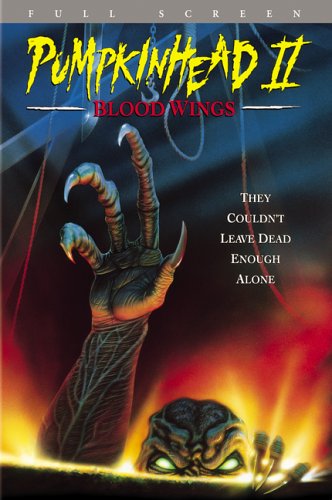
The Red Eye Report's 2010 October Horrorthon #17: "Pumpkinhead II: Blood Wings"


Ah, yes, the 1950s. It was an innocent era, one of soda fountains, Buddy Holly, and premeditated murder. At least that's how it was in the cozy hamlet of Ferren Woods, were some teenage toughs slashed up a deformed mountain boy and made his death look like an accident. Some years later, whispers of the kid still echo throughout Ferren Woods, and they only get louder when a group of 30-year-old highschoolers swing by his gravesite. Through an elaborate and easily-avoidable ritual, the teens end up calling upon the demon Pumpkinhead, who proceeds to go on a bloody, vengeful tear through town on the dead boy's behalf. But after justice has been served, Pumpkinhead gets a hankering for fresh meat, leaving the kids little time to save their skins and send the giant clawed one back to the hell from whence it came.

Pumpkinhead II: Blood Wings was one of the first scary movies I remember noticing when my parents buckled down and got HBO. Chances are that if it was late at night, this was on, and the likes of Leprechaun 2 or Ticks were soon to follow. But I never sat down for the whole thing (Killer Klowns from Outer Space was more my speed), and when I finally caught the 1988 original a few years back, it took me till now to summon the interest to explore its sequels. After watching Blood Wings, I could have waited a few more centuries, but to be fair, not a lot of folks dig this one to begin with. Pumpkinheads 3 and 4 have gotten a crummy rap as well, though it's Blood Wings that gets particularly dumped on for departing so much from its cult predecessor. Still, I wasn't a huge fan of the first flick, so I don't really hate its inaugural follow-up out of a sense of allegiance -- not when there are so many other things to hate it for.

No doubt, Pumpkinhead II is a dud, but it's a dud for the usual reasons: paper-thin acting, ho-hum effects work, and a script that chews up and spits out anything mildly creative (which you tend to get with Jeff "Sequel Killer" Burr in the director's chair). But reports of the film's unendurable crappiness have been greatly exaggerated, and I'd be lying if I said it didn't amuse me, at least a little bit. While the acting is indeed terrible, just looking over the casting choices is entertaining on its own. Andrew Robinson (Hellraiser) and Linnea Quigley are no big shock, but then come Soleil Moon Frye, Kane Hodder, and Roger Clinton (of "I'm freaking related to Bill Clinton" fame) to have you eager to see what C-list celebs will pop their heads in next. Also, as horribly executed as Pumpkinhead's kills are (mostly due to an accompanying strobe light that makes them borderline unwatchable), they're fun in their inherent silliness, especially when he takes on a trio of redneck chicken farmers.

Most people can and will go their whole lives without seeing Pumpkinhead II: Blood Wings. In fact, horror fans probably can too, save for us masochists, completists, and the compulsive at heart that just have to watch anything and everything. It'll be a while before Pumpkinhead: Ashes to Ashes ends up in my player, but should anyone be foolish enough to question why, one finger pointed in the direction of Blood Wings oughta be enough to say it all.

Saturday, October 16, 2010

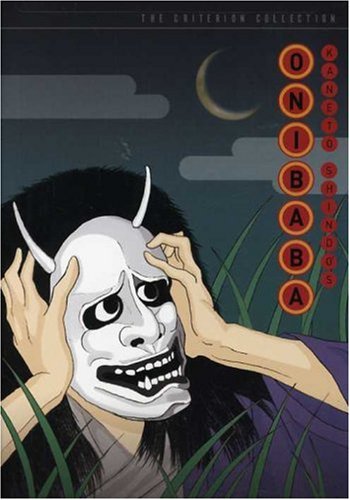
The Red Eye Report's 2010 October Horrorthon #16: "Onibaba"


Japan's "Warring States" period was not a good time to be a peasant. Civil war left the country in ruins, its two highest courts were at each other's throats, and, as always, the lower class paid the price. In a house stationed amidst a vast susuki field live the mother (Nobuko Otowa) and wife (Jitsuko Yoshimura) of a farmer who was called off to battle. It's just been the two of them for a while, squeezing out a living by ambushing the occasional samurai and selling off whatever belongings they can. But out of the blue one day comes Hachi (Kei Sato), a neighbor who finally fled from the bloodshed. Slowly, he integrates himself into the womens' self-enclosed world, spurning the mother's advances while enjoying some splendor in the grass with her daughter-in-law. Emotions are mounting as is, but when a wandering warrior with a demonic mask pays the trio a visit, all of the brewing treachery and betrayal comes to a terrifying boil.


One man, two women, an isolated setting, the air thick with sexual tension -- you'd swear Onibaba was written by Tennessee Williams after a sake bender. But Kaneto Shindo's 1964 picture draws its inspiration from a Buddhist parable, which is enough of an indication that this flick will be playing old-school. Onibaba isn't very steeped in the supernatural (as unlikely as certain scenarios are, they do have basis in reality), but karmic overtones are liberally dispersed throughout. Shindo shows some very bad people doing very bad things, but it's how he goes about displaying his morality that makes the story so fascinating. This isn't so much a battle between good and evil as it one between two different evils -- the farmer's mother doesn't want to lose her partner in crime, and Hachi is just a horny bastard, and in spite of all this, the daughter still grows herself a conscience. It's fair to say Onibaba doesn't sound interesting if a bunch of bickering louts is all we get, but Shindo has us covered by adding a distinctive visual sweep to an otherwise simple story.


While there are several sections in which very little action takes place, Onibaba always has something planned to keep viewers absorbed. The opening scene, which contains no dialogue and lasts around ten minutes, follows two unfortunate samurai who stumble through the susuki reeds and discover the true extent of the dangers war hath wrought. The unknown does present itself when the mother uses her daughter-in-law's fear of religion to scare her away from Hachi, which brings the film's Buddhist origins (not to mention that funky cover art) full circle. These interactions really make the film, thanks in great part to a hell of an on-target ensemble. Otowa projects a hint of innocence (after all, it wasn't her character's first choice to blindside samurai for a living) while she embodies the perfect manipulative spirit. Meanwhile, Sato taps into his inner Toshiro Mifune to play a scoundrel who couldn't be more pleased to be one, and though Yoshimura has a tough time being noticed, she still holds her own and walks away with a solid performance as the closest thing we have to a "good guy."


A bit slow-going at times, Onibaba more than compensates for it with a tale whose emotions draw in your psyche and keep it locked on the action. Emphasis is on art over keeping the plot occupied, but it's to Shindo's credit that he involves you in the proceedings with a minimum of story and many sections that do without spoken words period. The Criterion Collection did well in admitting entrance to Onibaba, a tale whose terrors are no one's fault but our own souls.

Friday, October 15, 2010

The Red Eye Report's 2010 October Horrorthon #15: "Noriko's Dinner Table"


Noriko Shimabara (Kazue Fukiishi) is like any other 17-year-old girl. She's pressured to do well in school, isn't that popular, and feels distant from her own family. So what does Noriko do instead of seeking help from a professional counselor? Why, she tags along with an Internet cult, of course. After visiting a site frequented by lonely teens like herself, Noriko is taken under the wing of its creator, Kumiko (Tsugumi). If convincing over 50 schoolgirls to leap to their deaths off of a subway platform wasn't enough, Kumiko introduces Noriko to her specialty business, which provides clients the luxury of surrogate family members on demand. Noriko's sister Yuka (Yuriko Yoshitaka) soon follows suit, but with his family crumbling before him, their father (Ken Mitsuishi) sets out to reclaim his flesh and blood, no matter the cost to what's left of his life and limb.


To be clear, Noriko's Dinner Table isn't a horror film, strictly speaking. Writer/director Sion Sono meant it as a companion piece to his cult favorite Suicide Club, with a number of its events woven throughout this one. It'd probably help if I'd seen Suicide Club before, but give or take a few moments that stand out, I was never all that lost. Noriko's Dinner Table is its own beast, addressing the troubled teen angle not from Suicide Club's sensational perspective but with a somber, low-key touch. Images here are meant to shock but on a different level, by way of Sono challenging viewers with concepts we usually take for granted. Does just being around make you a good parent? How well do you really know your children? What is it like to perform all the functions of a family unit without any of the commitment? Sono has a firm grasp of what he wants to get across and does so without allowing his ideas to fall prey to exploitation.


So with this good of a premise and mature of a philosophy, why do I hate Noriko's Dinner Table with the intensity of a million exploding Kryptons? Well, as much as I hate disliking a film based on one factor alone, it's a real doozy in this case: plain and simple, the characters do not shut up. I'm not talking about a little extra dialogue here or some unnecessary narration there. If Kumiko has suspicions about a customer, she talks about it. If Yuka is writing a story, she details what she's writing while she writes it. If Mr. Shimabara is plotting to get his daughter back, he takes us through every step of doing so. There's rarely one moment on God's green earth in which we the viewers are allowed to study body language, listen to dialogue, and -- GASP -- form our own damn interpretations of what's going on! True, you could see it as an abstract way of commenting on how teens like Noriko constantly confess their turmoils, but it's taken to such an extreme (an agonizing, repetitive, 159-minute extreme) that no matter the intelligence Sono began with, his results feel as emotionally resonant as a Justin Bieber groupie's LiveJournal.

You really have no idea what a chore it was to sit through Noriko's Dinner Table. Decorum dictates that I give it merit for introduction the concepts it does and, in the scant moments where Sono isn't yanking you around by a thematic choke chain, enabling them to come through to a fascinating effect. But the fact that so many characters run so rampant with their internal monologues so often is what makes Noriko's Dinner Table less a slice of social commentary and more a battle not to end up wearing your flatscreen as a wristwatch.

Thursday, October 14, 2010

The Red Eye Report's 2010 October Horrorthon #14: "Monster X Strikes Back: Attack the G8 Summit"


Another year, another G8 summit, and another chance for world leaders to pretend they're accomplishing something. Heads of state from the U.S., Russia, and elsewhere have gathered at Hokkaido's scenic Lake Toya to brainstorm ways they can save the environment. But the talks have barely begun before a greater threat arrives in the form of a towering monster from outer space. Focus instantly switches to taking down the massive beast, and while all the G8 attendees have their own plans of action, their attempts only egg on the creature's tour of destruction. Luckily, two plucky reporters (Kazuki Kato and Natsuki Kato) are on the case, and with the help of a backwoods cult, they might be able to summon the only force that can destroy this intruder from beyond for good.

Monster X Strikes Back is the second flick I've seen in as many years in which Japan pokes fun at its own kaiju conventions. The other was Big Man Japan, whose approach was very deadpan, so it falls upon Monster X Strikes Back to travel the road more goofy. But no matter how much sentiment was put into them, both features share a very inconsistent sense of humor and satire. It's Japan's answer to The Lost Skeleton of Cadavra, as both are pleasant parodies of B-movies whose only gags consist of -- well -- being B-movies. It's affectionate, but it's just not that funny, something the Godzilla-style romps it's spoofing were while actually being honest-to-God entertaining. Monster X Strikes Back is structured like a joke that takes 98 minutes to tell, and at the end, the punchline is that you were told a joke.

But I should mention that kaiju disciples may be disappointed that this film is less monster mash and more political satire. In this respect, Monster X Strikes Back lands its share of zingers, most of which stem from how gleefully stereotypical it portrays the G8 bigwigs. Everyone's looking out for #1, everyone has their own agenda, and everyone has silly names like "Beefstroganoff Puttin" and "Maplesyrup Harris" that are never actually used in the flick but the credits supply regardless. The goofiness of it all is pretty amusing, but the film loses its effectiveness the more it goes for the easy laughs. Topical humor aside, the movie is still a mighty letdown in the monster department. The title titan (who's named Guilala and never referred to as Monster X -- you figure it out) sorta resembles Godzilla with his head stuck in a UFO, but other than catching stray missles and trampling the odd power plant, he's there chiefly to make the G8 crew look like a bunch of dumbasses.

Monster X Strikes Back isn't necessarily bad and might even provide giant monster fans more seasoned than I with a few nice chuckles. I dug the silly tone and shamelessly overt political jabs, but the misses just happened to outweigh the hits by too wide of a margin. Though Monster X Strikes Back is a harmless lark, honest laughs are as hard to come by as a Tokyo skyscraper that the Big G hasn't set aflame.